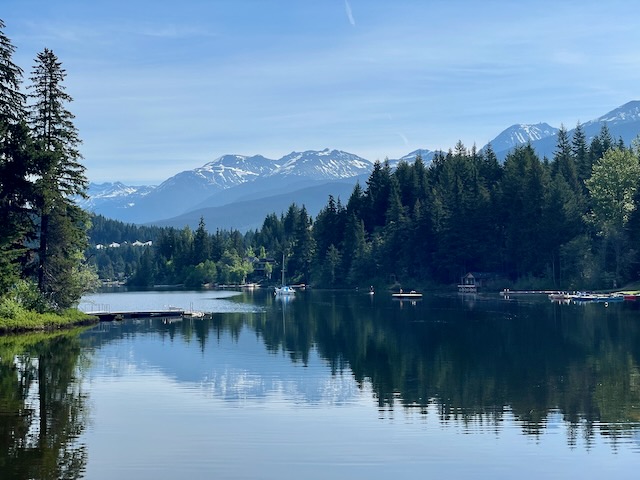
North of Vancouver, the land falls away. The highway narrows to a few lanes that cling to the mountainside. Above, the coastal rainforest ascends to the clouds. Below, white water creeks rage down those same cliffs to the sea.
The city ends abruptly, since the land makes the city impossible. This is the Sea to Sky Highway—the road to Whistler. A road I finally took last month, after living nearly seven years in Vancouver.
I went to Whistler for outdoor adventure. But as a writer, when I travel, I look for stories. Stories focus on one or a few aspects of a setting, which becomes the filter for everything we learn about it. But any place can hold multiple stories.
First comes the White Lotus-esque satire of the wealthy, extravagant traveller. Whistler is a metropolis in the wilderness, complete with fine dining, public transit, and grossly unaffordable housing. The village centre is car-free and cluttered with upscale outdoor brands that tourists think they need for a 2 km lake hike. The drug store sells bear spray. Tour companies advertise ATV tours that end with mountaintop dining.
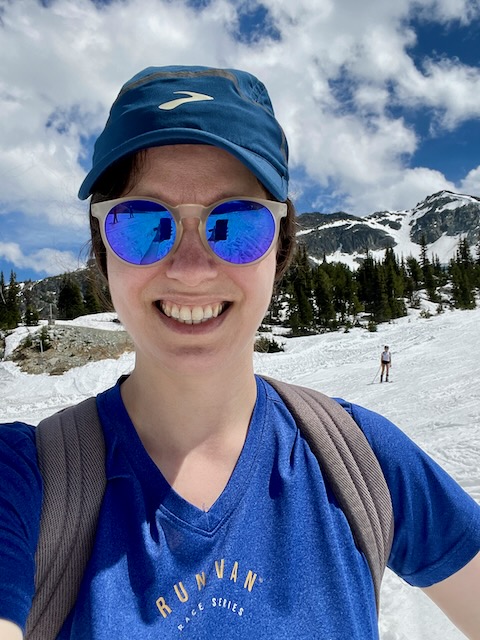
Second comes the sports story. Striving athletes come here to perfect their sport. Weekend warriors extend ski season to its limit, and young Australians tolerate overcrowded housing and minimum wage jobs in order to live on the slopes. There was something surreal about sweating in the sun on a 22 degree Celsius day while watching snowboarders board a gondola. The snow had long since vanished from the village, which was in the full bloom of spring, but still coated the peak a thousand metres above. I rode the gondola to the top of Blackcomb Mountain, not to ski, but to take in the surreal experience of sweating in the snow.
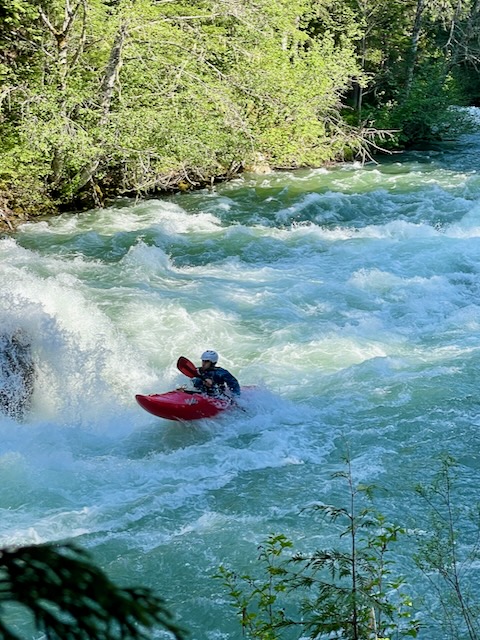
Third is the wilderness misadventure. You know the tale: city folks go on a camping trip, where everything that can go wrong, does go wrong. (On second thought, maybe that bear spray was a good idea). The steep mountains around Whistler are perfect for hiking, so long as you’re cautious and prepared, while the lakes in the valley are popular for swimming and boating. Although the alpine trails were still covered in snowboarders, I hiked to an ancient volcanic crater where a landslide had exposed the columnar basalt cliffs. I watched kayakers navigate a raging river swelled by the spring runoff. And I indulged in that most Canadian pastime: canoeing.
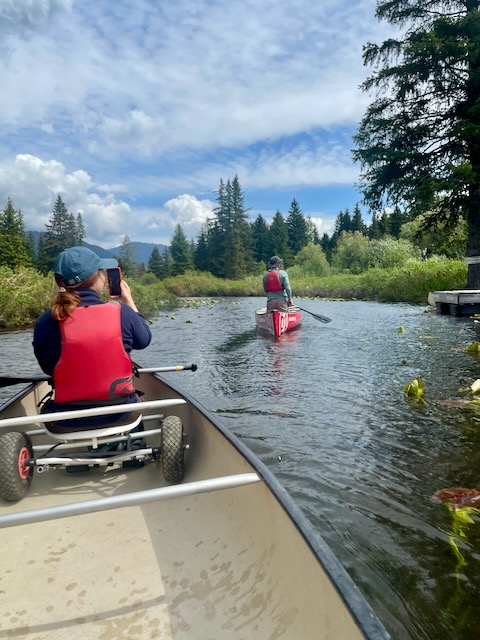
Canoeing is a staple of North American summer camp—yet another story. This was no canoe war with teenagers competing to sink each other’s vessels – only a gentle glide down a meandering, marshy river. The tour company paired me with a German woman who had never canoed before and had a habit of paddling the boat towards obstacles. Our journey was bumpy, but we stayed dry. I hope the geese were amused.
I experienced none of these stories, but I still found the seeds of them on a long weekend journey. The rest comes from imagination. One place can contain many stories, but it can be easier to see those stories when you’re new to a place and you haven’t already stamped your own narrative on it.
 Allison Render - Fantasy Writer
Leave a comment